There are many factors that affect children’s breathing
According to experts, children are more susceptible to respiratory diseases than adults because they are young and playful, so they have fun without having a sense of hygiene. While the respiratory tract is the main place for many viral pathogens, bacteria easily enter when children breathe.
For children, due to the short and narrow airways, pathogens are also more easily spread. Especially, children in primary school are often attacked by respiratory diseases because their immune systems are immature, so their resistance and immunity are poor. Therefore, children are not strong enough to resist the attack of pathogens that invade from the outside.
For example, it is normal for children of preschool and primary school age to just play with toys on dirty soil and then put their hands to their mouth or pick their noses, and bacteria and viruses can easily enter the body.
In addition, environmental factors such as environmental pollution, changes in weather, low air humidity … are also the causes affecting the respiratory tract in young children.
According to experts, in school-age children, there are two main groups of diseases that children often get: acute respiratory infections (such as upper respiratory infections, rhinitis, pneumonia), allergic diseases. respiratory tract (such as allergic rhinitis, allergic sinusitis, asthma, pharyngitis, otitis media). In particular, if the weather turns cold, the season changes, the temperature drops… it is also a favorable condition for children to catch the flu.
If the upper respiratory tract infection is not completely treated, it is very likely to turn into bronchitis, pneumonia, especially acute bronchitis and pneumonia.
Children with respiratory infections often have fever, cough, many children may have moderate fever or high fever of 39-40 degrees Celsius, some children have respiratory infections accompanied by difficulty breathing … leading to children having to miss school. greatly affect health and life.
Signs of a child with a respiratory illness
For mild respiratory infections, children often have symptoms such as: Cough, dry cough, cough with phlegm, wheezing, stuffy nose, runny nose, shortness of breath, rapid breathing, chest pain, fatigue… sometimes with fever or some signs outside the respiratory tract such as headache, vomiting, abort feeding.
For mild respiratory infections, children often have symptoms such as: Cough, dry cough, cough with phlegm, wheezing, nasal congestion, runny nose, shortness of breath, rapid breathing, chest pain, fatigue …
Children with asthma, bronchiolitis, and bronchitis may cough with wheezing.
Children under 6 years of age are often infected with the virus 4-6 times per year with symptoms of upper respiratory infections such as pharyngitis, laryngitis, bronchitis …
If the child has symptoms of cough with the following symptoms, parents need to take the child to a doctor or medical facility for timely examination and treatment:
Baby under 4 months old with cough
The child has a cough with a fever higher than 38 degrees Celsius or has vomiting a lot, continuously.
Baby starts to reduce cough but lethargy, not alert, lethargic
Baby coughs and is irritable, refuses to feed or eats for 6-8 hours
Your baby’s cough is accompanied by wheezing or is extremely difficult to breathe.
Your baby coughs up sputum that is green, yellow or bloody…
Proper care for children when they have respiratory infections
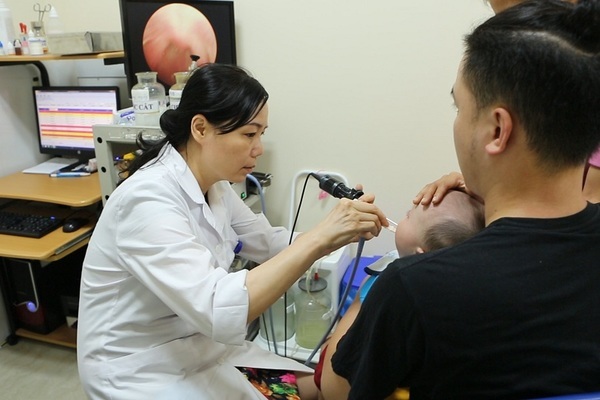
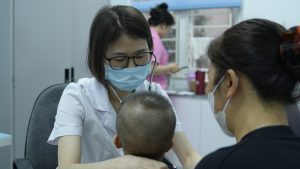
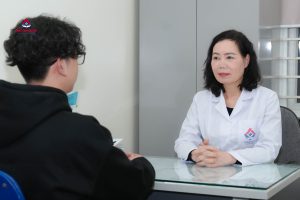
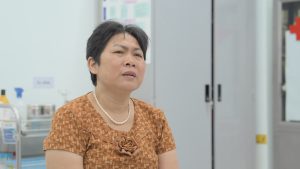
Associate Professor Nguyen Thi Hoai An – Director of An Viet General Hospital (Hanoi) said that almost every year the number of children suffering from respiratory diseases increases. This year, due to the impact of the epidemic, it will be more difficult to visit the doctor. Meanwhile, the characteristics of young children are not fully developed respiratory system, short airway, breathing many times per minute, so pathogens can easily penetrate causing respiratory infections.
This is a disease that easily recurs many times, so it makes parents worry.
Director of An Viet General Hospital said that, if you have a respiratory infection with good care, most respiratory infections can go away on their own.
Facing the somewhat limited travel situation, Associate Professor Nguyen Thi Hoai An shared the measures parents can refer to for information on how to care for children with respiratory infections at home below:
First, in case the baby has a fever: You can take paracetamol from 10 to 15mg / 1kg when the fever is over 38.5 degrees. If the child has a fever but still has a high fever after using it, give him a warm bath (wet his head) to cool down quickly and avoid convulsions due to high fever.
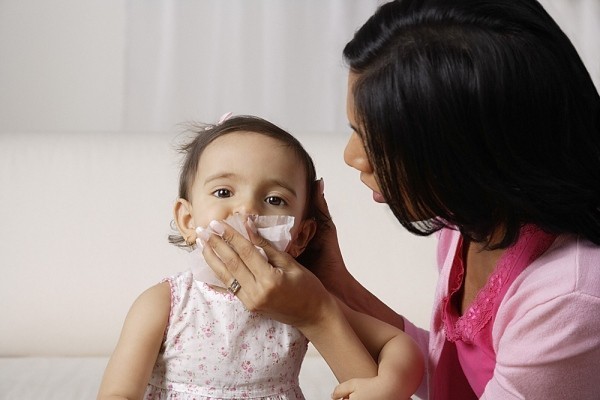
Second, the baby has a runny nose: It is recommended to wipe the baby’s nose with a soft, dry towel (preferably a soft tissue). Keep warm. In the summer, let your baby wear cool clothes, avoid lying in the direction of the fan or air conditioner. Room temperature is above or equal to 25 degrees Celsius.
Third, the baby has a stuffy nose: Use physiological saline solution (NaCl 0.9%) to dilute the baby’s nose, then clean and dry the nose with a clean, dry cotton swab.
Fourth, the baby coughs: Take medicine as prescribed by the doctor. Drinking a lot of water and patting the back often is important, this helps to thin the phlegm, loosen the phlegm, and reduce the baby’s cough.
Fifth, the baby vomits: Vomiting can be caused by thick sputum, it can also be due to a serious illness. Therefore, if you are being treated and see a lot of vomiting, you should have your baby re-examined.
Associate Professor An said that at this time, nutrition also needs more attention. Children must enhance feeding, suckling, avoiding fasting habits.. This is very important because children with pneumonia need to be provided with plenty of water to thin sputum, soothe throat, and reduce cough. Need for children










 05/05/2025 09:06
 English
  Tiếng Việt